


Manga Dogs : Manga & Comics
LuminaCode
I installed Manga Dogs expecting a straightforward way to browse manga, comics, manhwa, and webtoons, and that is exactly the role it seems designed to fill: a lightweight reader for people who want to move from “I feel like reading something” to an actual page without a complicated setup. It is a free Comics app from LuminaCode, aimed at Everyone, and it supports Android devices running Android 7.0 or later.
My first impression was that its appeal is less about turning comic reading into a social experience and more about reducing the distance between discovery and reading. The name is simple, the current release is version 1.0.0, and the app has passed the early adoption stage with over 10 thousand installs. That does not make it a proven replacement for every established comic platform, but it does make it interesting for readers who want to try a focused reader without paying before they know whether it fits their habits.
The useful question is not whether it can replace every manga or webtoon service. It cannot be judged that way from its purpose alone. The better question is whether it makes your personal reading routine easier: finding a title, opening it comfortably, keeping track of what you are reading, and returning later without unnecessary effort. In my experience, that workflow is where an app like this succeeds or becomes frustrating.
From a vague reading mood to an open comic
Most reading sessions begin with a small, unplanned decision. I might have ten quiet minutes on a commute, want a few pages before bed, or feel like switching from a long novel to something visual. A broad comic app needs to handle that uncertain starting point well. If I already know the exact title, search and opening speed matter most. If I do not know what I want, browsing needs to feel clear rather than like sorting through a crowded shelf.
Manga Dogs is positioned around that broad mix of formats. Manga, traditional comics, manhwa, and webtoons do not all read in the same way, so the app’s central challenge is not merely showing images. It needs to let the reader move between different presentation styles without making the process feel like four separate applications. That makes the first few minutes important: I want to identify a title, understand what kind of reading experience it offers, and start reading without having to learn a complicated system.
Related News

Why WhatsApp Messenger Still Makes Everyday Communication Feel Easy

Jurassic World: The Game Is the Better Dino Tycoon for Strategic Players

Threads in Real Life: Who Should Join, Lurk, or Leave

How SHEIN Turned Shopping Into an Endless Content Feed

How to Make Fortnite Feel Smarter on Mobile

Should You Switch to Microsoft Outlook on Mobile?
For a new user, I would begin with a practical test rather than trying to organize an entire library immediately. Search for one familiar title if you have one, then browse for something unfamiliar. This quickly reveals whether the app matches your discovery habits. A reader who mainly follows known series will care about finding a title quickly and reopening it later. Someone who browses casually will care more about how understandable the catalog feels and whether the visual presentation helps separate manga, manhwa, webtoons, and comics.
That distinction is important because free reading apps often attract two very different audiences. One group wants a simple doorway into reading. The other wants a carefully managed collection with deep organization and a dependable history of every chapter. Manga Dogs feels more naturally suited to the first group. I can see its value for a casual reader who wants a fast route to comics, while a serious collector may expect more control than a compact app can comfortably provide.
The first practical workflow
My recommended starting workflow is deliberately small. Open the app, search or browse for one title, read enough to judge the page experience, then leave and return later. Do not begin by assuming that a broad catalog automatically means every favorite series will be available in the exact form you expect. Availability, presentation, and reading comfort are separate questions, and testing all three with one or two titles gives a more honest impression than judging the app by its name.
Gallery
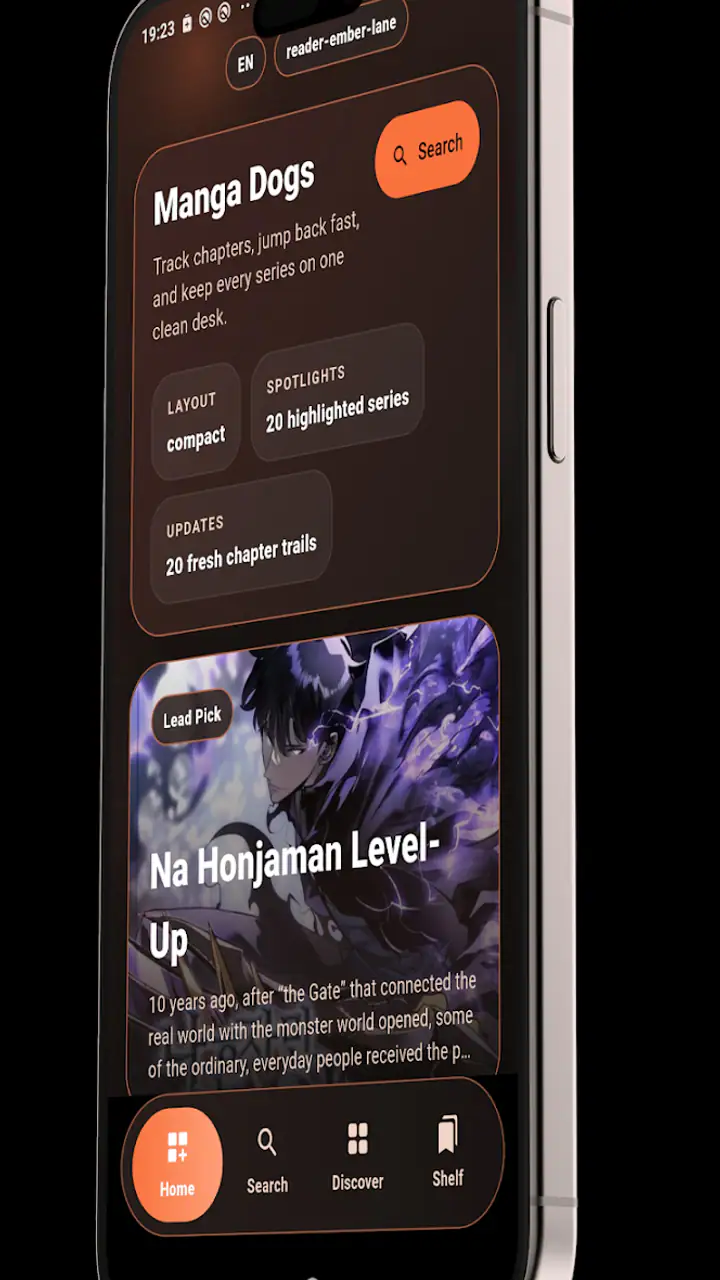
When the app works well for your chosen title, the handoff from discovery to reading should feel natural. You move from a cover or listing to the actual pages, and the app’s value becomes visible in the small details: whether the page is easy to follow, whether scrolling feels natural for a webtoon, and whether a conventional comic page remains readable on a phone. I would pay particular attention to how often I need to pinch, zoom, rotate the device, or manually correct my position. Those little interruptions matter more than a polished first screen during a real reading session.
A useful tip is to judge each format on its own terms. A vertical webtoon should not be evaluated like a page-based manga chapter, and a comic with dense speech bubbles needs a different level of zoom than a panel with large artwork. If your reading list mixes formats, spend a few minutes with each before deciding whether the app is comfortable enough for daily use. This is one of the less obvious trade-offs of a multi-format reader: variety is convenient, but consistency can be harder to achieve.
How I would use it during an ordinary day
Imagine a realistic evening. I have a short break after dinner and do not want to commit to a full episode of a show or a long chapter of prose. I open the app, browse for a familiar series, and read a small section. The ideal outcome is not an elaborate session; it is simply that the app gets out of the way. I should be able to stop when I need to, return later, and spend my time reading rather than reconstructing where I was.
That same workflow changes on a commute. A phone may be held in one hand, the screen may be smaller than a tablet, and attention may be interrupted. In that situation, a fast reader is useful only if the page layout remains legible without constant gestures. I would test the app in the environment where I actually plan to use it, not only while sitting at home with perfect attention. A reading experience that feels fine at a desk may become tiring when every panel requires adjustment.
For younger readers or families, the Everyone content rating is reassuring as a starting point, but I would still treat the rating as a general audience label rather than a promise that every individual comic suits every child. The catalog covers multiple comic traditions and themes can vary from title to title. Parents should still choose reading material with the same care they would use in any broad comics library.
The handoff between discovery, reading, and returning
The most important handoff in a reader is the moment after the first session. Finding a title is only useful if returning to it is easy. I would therefore test the app in three stages: discover something, close it, and come back later without relying on memory. If the return path is clear, the app can become part of a daily habit. If I have to repeat the entire search process every time, the convenience of the initial discovery is weakened.
This is also where expectations need to stay realistic. The store summary presents the app as a fast and easy reader, but “easy” means different things to different people. For a casual reader, it may mean a clean route from a title to its pages. For a collector, it may mean detailed shelves, precise status tracking, sorting, notes, and a reliable personal archive. I would not choose Manga Dogs solely because I want advanced catalog management. I would choose it if my priority is opening and reading with minimal ceremony.
A practical habit is to keep the first test list short. Pick one title you already know, one title from a different format, and one discovery that you have never read. This gives you a better picture of the app’s range than filling the library with dozens of items immediately. It also makes friction easier to identify: you can tell whether a problem belongs to search, format handling, navigation, or your own reading preference.
Another useful insight is that format switching can expose weaknesses that remain hidden during a single-series test. A page-based manga may feel comfortable while a long vertical webtoon reveals fatigue, or a detailed comic may show that text readability matters more than image quality. If your main interest is only one format, judge the app by that format. If you want all four, treat cross-format consistency as a deciding factor rather than a bonus.
Where it fits beside familiar alternatives
Compared with a dedicated manga service, Manga Dogs has a broader identity because it brings manga together with comics, manhwa, and webtoons. That can be useful when my interests change from one style to another and I do not want to maintain several separate reading apps. The trade-off is specialization. A service built around one publishing format may offer a more refined experience for that specific format, while this app’s appeal is the convenience of having different kinds of reading in one place.
Compared with a general web browser, a dedicated reader should feel more focused. A browser is flexible, but it also brings tabs, unrelated page elements, and inconsistent layouts into the reading session. Manga Dogs makes more sense when I want the app itself to be the reading destination rather than a doorway to many unrelated websites. The advantage is concentration; the limitation is that I am working within the app’s own way of organizing and presenting material.
Compared with a large, highly established comics platform, the decision becomes more personal. An established alternative may be better for readers who demand a mature ecosystem, extensive account tools, or a very specific official catalog. Manga Dogs is more appealing to someone who values a free, uncomplicated starting point and wants to explore several comic styles. I would not switch away from a service that already handles my collection perfectly just for the sake of having another reader, but I would try this one if my current setup feels scattered or overly heavy.
There is also a difference between reading convenience and publication support. If your priority is obtaining officially licensed releases, checking regional availability, or supporting a particular publisher, you should compare the app with the official service for that series. A broad reader may be convenient, but convenience should not be confused with the same role as a publisher’s platform. That is a meaningful reason some readers may prefer a different option.
What can interrupt the reading flow
The biggest potential weakness is the gap between a promising general reader and a truly dependable long-term library. A first release can be attractive because it is simple, yet experienced readers often develop precise expectations about history, organization, and continuity. If the app does not match those expectations, the friction appears after several sessions rather than during the first five minutes.
Catalog breadth can create a similar issue. Supporting several comic formats sounds convenient, but readers need to know whether the titles they care about are easy to locate and comfortable to read. I would not assume that a category label guarantees a particular series, chapter arrangement, translation, or presentation. The sensible approach is to test your own reading list before moving your whole routine into the app.
Device comfort is another possible breaking point. Android support beginning with Android 7.0 makes the app accessible to a wide range of devices, but compatibility alone does not determine how pleasant reading feels. Screen size, brightness, battery condition, and the way you hold the phone all affect the experience. On an older or smaller handset, dense pages may require more zooming and repositioning. On a larger screen, the same material may feel much easier to follow.
Free access is helpful, especially for someone who wants to experiment without a purchase decision. At the same time, readers should separate “free to install” from “perfect for every need.” If you require a particular catalog, advanced collection tools, or a publisher-specific reading experience, a paid or official alternative may still be the better choice. The absence of an upfront cost makes testing easy, not every limitation irrelevant.
Who should try it, and who should skip it
I would recommend Manga Dogs to a casual comic reader who wants one place to explore manga, comics, manhwa, and webtoons. It is also a sensible trial for someone whose current routine is fragmented across browser bookmarks and several reading apps. The free price removes much of the risk, and the Everyone rating makes it approachable for general audiences, provided each reader still chooses suitable titles.
I would be more cautious if you are a dedicated collector who needs a meticulously managed reading history or a highly specialized service for one format. I would also look elsewhere if your decision depends on a specific official release, publisher relationship, or catalog detail that you have not personally checked. In those cases, a dedicated alternative may save time even if it is less broad.
For a family device, I would use it as a shared discovery tool only with clear expectations. The broad category is convenient, but adults should still guide younger readers toward appropriate series. For a solo adult reader, the more relevant test is whether the app’s navigation and page presentation fit your habits. The same app can be a pleasant lightweight reader for one person and an insufficient library manager for another.
My practical verdict after following the full workflow
My view is that Manga Dogs is best understood as a low-commitment entry point rather than an automatic replacement for every comics service. It takes the reader from a general urge to browse toward a focused reading session, and its support for several comic formats gives it a useful place on an Android device. The strongest reason to try it is convenience: I can explore different kinds of visual storytelling without beginning with a subscription or a complicated setup.
The right way to decide is to run your own small workflow. Test a known title, try a different format, close the app, and return later. Notice how much effort is spent reading versus searching, adjusting pages, or rebuilding your place. That process answers the questions that a short store description cannot: whether your favorite material is easy to reach, whether the screen remains comfortable, and whether the app supports the way you actually stop and resume reading.
LuminaCode has made a focused free Comics app that is easy to understand at a glance. I like its broad reading ambition, but I would keep my expectations tied to the experience it offers rather than assuming breadth equals depth. If your goal is quick, flexible comic discovery with a simple path into reading, this is worth trying; if your goal is a fully specialized and carefully managed publishing library, another service may fit you better.
FAQs for Manga Dogs : Manga & Comics
What is Manga Dogs: Manga & Comics?
Manga Dogs: Manga & Comics is a mobile reading app designed for manga and comic fans. It brings together a large selection of titles in a convenient catalog, allowing readers to browse by genre, search for specific series, and keep track of stories they are following. The exact availability of titles and reading features may vary depending on your device, region, and the current version of the app.
Is Manga Dogs: Manga & Comics free to download and use?
The app can generally be downloaded without an upfront purchase, but free access does not necessarily mean that every feature or title is completely free. Depending on the version, users may encounter advertising, optional in-app purchases, premium content, or other limitations. Before downloading, it is worth checking the store listing for the latest pricing details and reviewing any subscription terms shown inside the application.
Does Manga Dogs offer offline manga reading?
Offline reading depends on the features supported by the current release and on the source or title you are accessing. Some manga applications allow chapters to be cached or downloaded for later use, while others require an active internet connection whenever pages are opened. If offline access is important to you, check the app’s download options, storage permissions, and terms before relying on it for travel or areas with limited connectivity.
Is Manga Dogs: Manga & Comics safe to use?
As with any application that displays content from multiple sources, users should download Manga Dogs only from a trusted official app store or verified developer page. Review the permissions requested during installation and avoid entering sensitive information unless it is clearly necessary. Content availability and external links can change, so parents may also want to check whether the catalog includes mature material and use device-level restrictions when appropriate.
What devices and features are supported by Manga Dogs?
Manga Dogs: Manga & Comics is intended for mobile reading on compatible Android or iOS devices, although supported operating systems can change with future updates. Typical features may include title search, genre browsing, bookmarks, reading history, favorites, notifications, and customizable reading preferences. Performance will depend on your phone or tablet, screen size, internet connection, and the app version installed, so checking the current store requirements is recommended.
Pros
- Large manga library covering many genres and reading preferences.
- Offline downloads make it convenient to read without an internet connection.
- Multiple reading modes support different screen sizes and habits.
- Personalized recommendations help users discover new series.
- Bookmarking and reading history make it easy to resume chapters.
Cons
- Content availability can vary by region and licensing restrictions.
- Some titles may contain intrusive advertisements between reading sessions.
- Translation quality may differ depending on the source or language.
- The app may use considerable storage when many chapters are downloaded.
- Updates and notifications can feel excessive for users following many series.


